
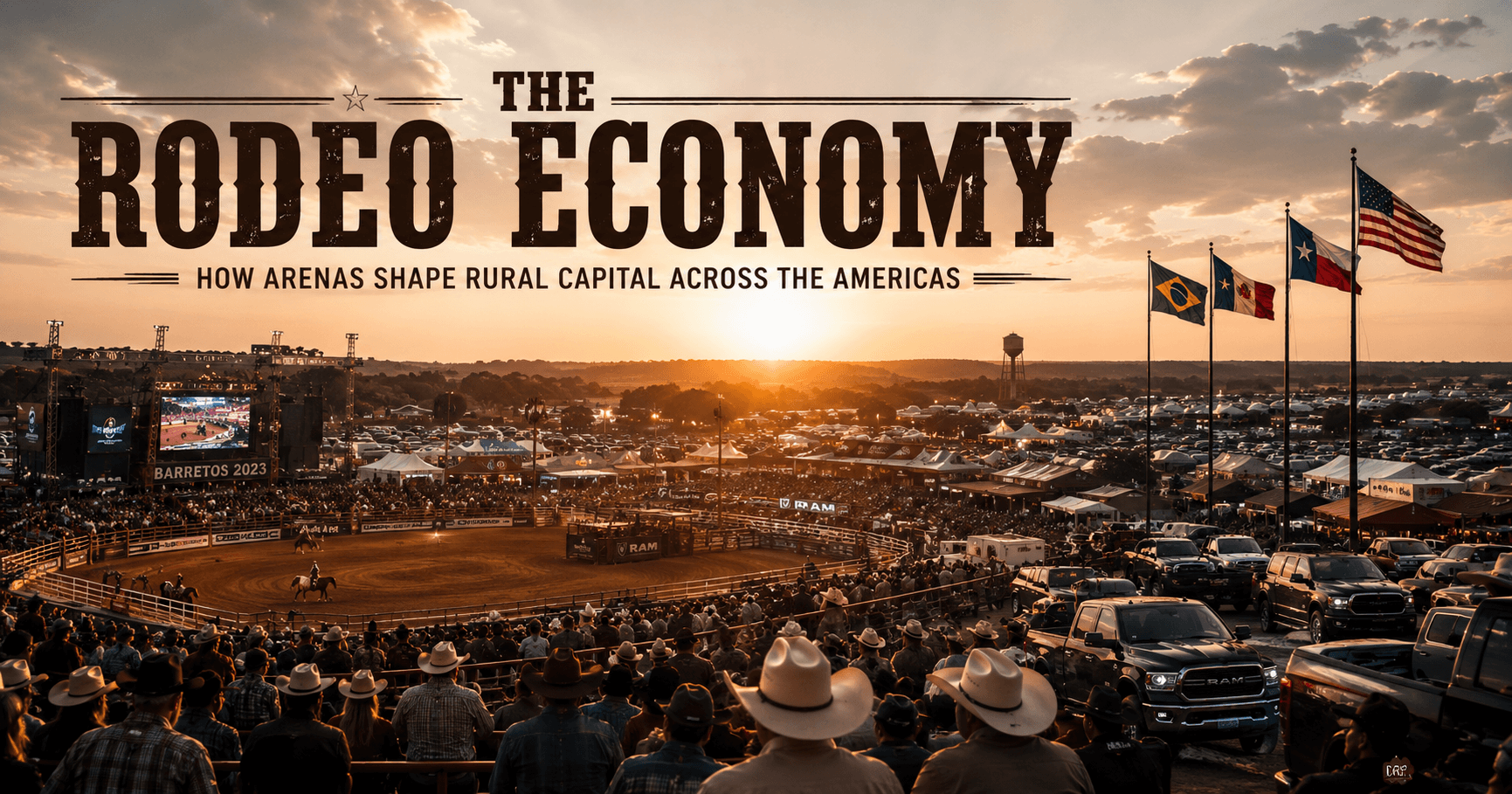
The Rodeo Economy: How Arenas Shape Rural Capital Across the Americas
THE CULTURAL ENGINE
How Rodeos Became the Infrastructure of Western Identity Across the Americas
Long before algorithms shaped culture and social media dictated trends, rural arenas were already functioning as powerful engines of identity, commerce and influence across the Americas.
Rodeos were never just sports.
They became gathering points where agriculture, entertainment, music, business, tourism and regional pride merged into a single cultural ecosystem. From Texas to Goiás, from Northern Mexico to the plains of Argentina, rodeo arenas evolved into the unofficial capitals of rural identity — places where economic activity followed emotion, tradition and belonging.
For decades, urban analysts underestimated the influence of these frontier spaces. Yet while major cities focused on finance and technology, rural entertainment circuits quietly shaped consumer behavior, imported foreign cultural symbols and created billion-dollar economies rooted in land, livestock and western aspiration.
The modern cowboy economy did not emerge from corporate boardrooms. It emerged from dust, arenas, pickup trucks, county fairs and country music speakers echoing across agricultural towns.
Rodeos Were Never Just Sports
The mainstream narrative often treats rodeos as isolated entertainment events — seasonal spectacles centered around bull riding, horses and agricultural traditions.
But historically, rodeos functioned as far more than competition.
They became rural social infrastructure.
Across the Americas, rodeo arenas evolved into economic and cultural hubs where entire regional ecosystems converged. Farmers, ranchers, livestock traders, musicians, politicians, western brands and tourism networks all gathered around the same spaces. These events created temporary capitals of commerce and influence, often generating more regional movement than formal business conferences.
In many agricultural regions, rodeos became the equivalent of urban cultural districts.
Hotels filled. Restaurants expanded. Gas stations operated nonstop. Local retailers experienced peak annual sales. Landowners negotiated deals. Western fashion brands launched products. Radio stations shaped regional tastes. Political figures sought visibility among rural voters.
The arena itself became a symbol of trust and identity.
This phenomenon is not exclusive to the United States.
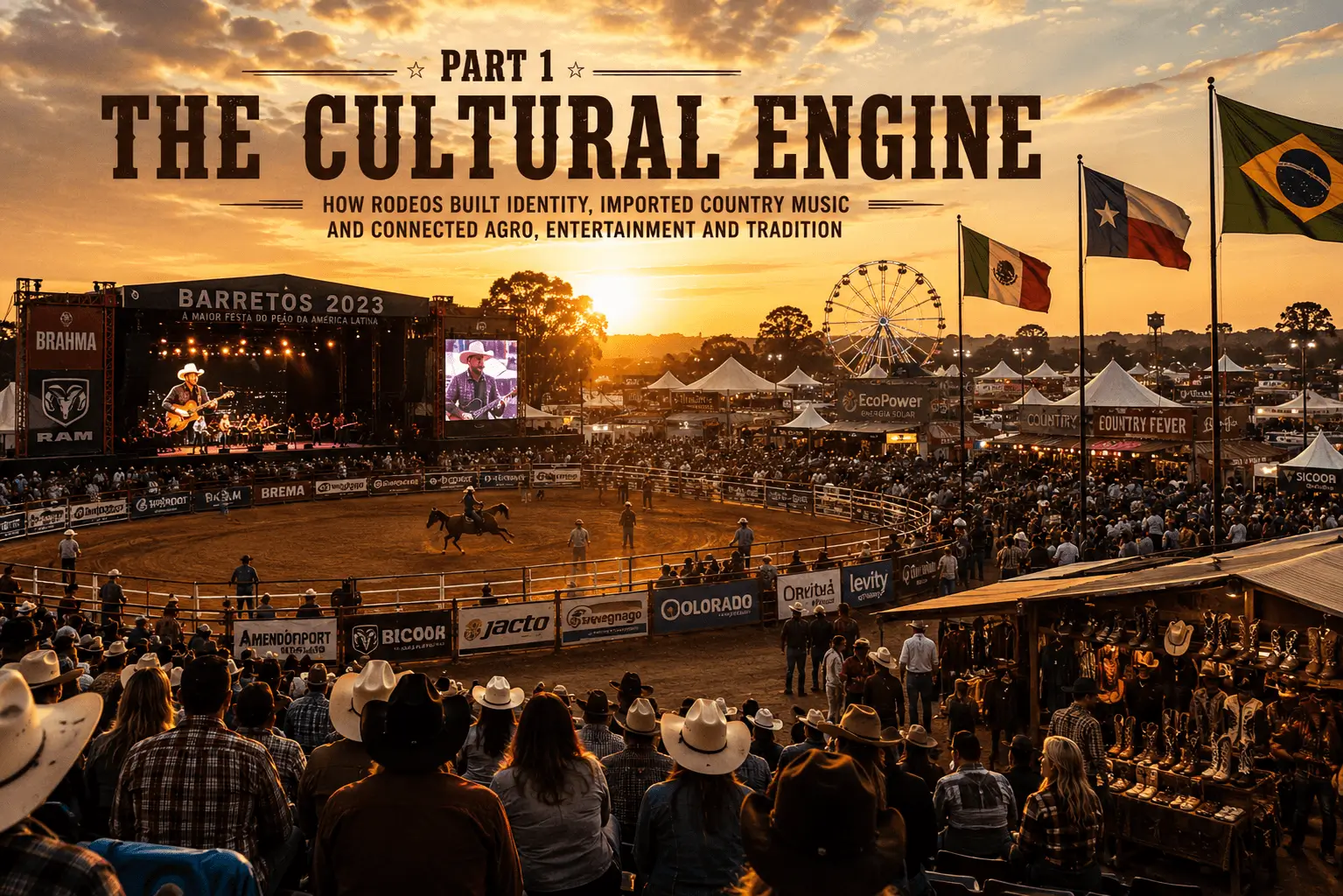
In Brazil, the massive rodeio circuits of Barretos, Jaguariúna and the interior of Goiás transformed rural entertainment into one of the strongest cultural industries in the country. In Mexico, the Palenques inside agricultural fairs became legendary spaces where regional music, local business and frontier traditions fused together. In Colombia, ferias agropecuarias connected cattle culture with music festivals and regional commerce.
What outsiders saw as entertainment was, in reality, an economic network built around rural identity.
How Brazil Imported American Country Culture Through Rodeos
One of the most fascinating examples of cultural circulation through rodeo infrastructure happened in Brazil.
American country music did not become influential in Brazil through mainstream radio, MTV or major urban media channels.
It arrived through rodeios.
The Brazilian countryside became the gateway through which American western identity entered the national imagination. Long before streaming platforms existed, rodeo festivals introduced Brazilian audiences to cowboy aesthetics, Nashville-inspired stage productions and country music legends.
Artists like Alan Jackson became recognizable names among Brazilian rodeo audiences even without massive mainstream exposure in major cities. His image — the cowboy hat, the denim, the boots, the rural authenticity — resonated deeply with agricultural communities already connected to livestock culture and frontier symbolism.
The rodeo arena acted as a translator between cultures.
Through these events, Brazil absorbed not only music, but an entire visual and emotional language associated with the American West. Pickup trucks became aspirational products. Western fashion expanded commercially. Cowboy hats transformed from practical accessories into symbols of lifestyle and identity.
Over time, the influence evolved into something uniquely Brazilian.
The rise of Sertanejo Universitário and later Agronejo mirrored many dynamics of modern American country music: large-scale arenas, emotional storytelling, luxury rural aesthetics and the blending of tradition with commercial entertainment.
Cities like Barretos became more than festival destinations. They became symbolic bridges connecting Brazilian agribusiness culture with the mythology of Texas and Nashville.
This cultural importation shaped not only entertainment, but consumption itself.
Western identity became marketable.
The Continental Frontier: Texas, Mexico, Brazil and Beyond
Although each country developed its own version of rural entertainment, the structural similarities are impossible to ignore.
In Texas, rodeos became institutions that merged livestock traditions with country music and regional branding. They created spaces where ranch culture evolved into economic identity. Entire industries grew around these circuits: trucks, boots, whiskey brands, tourism, real estate and media.
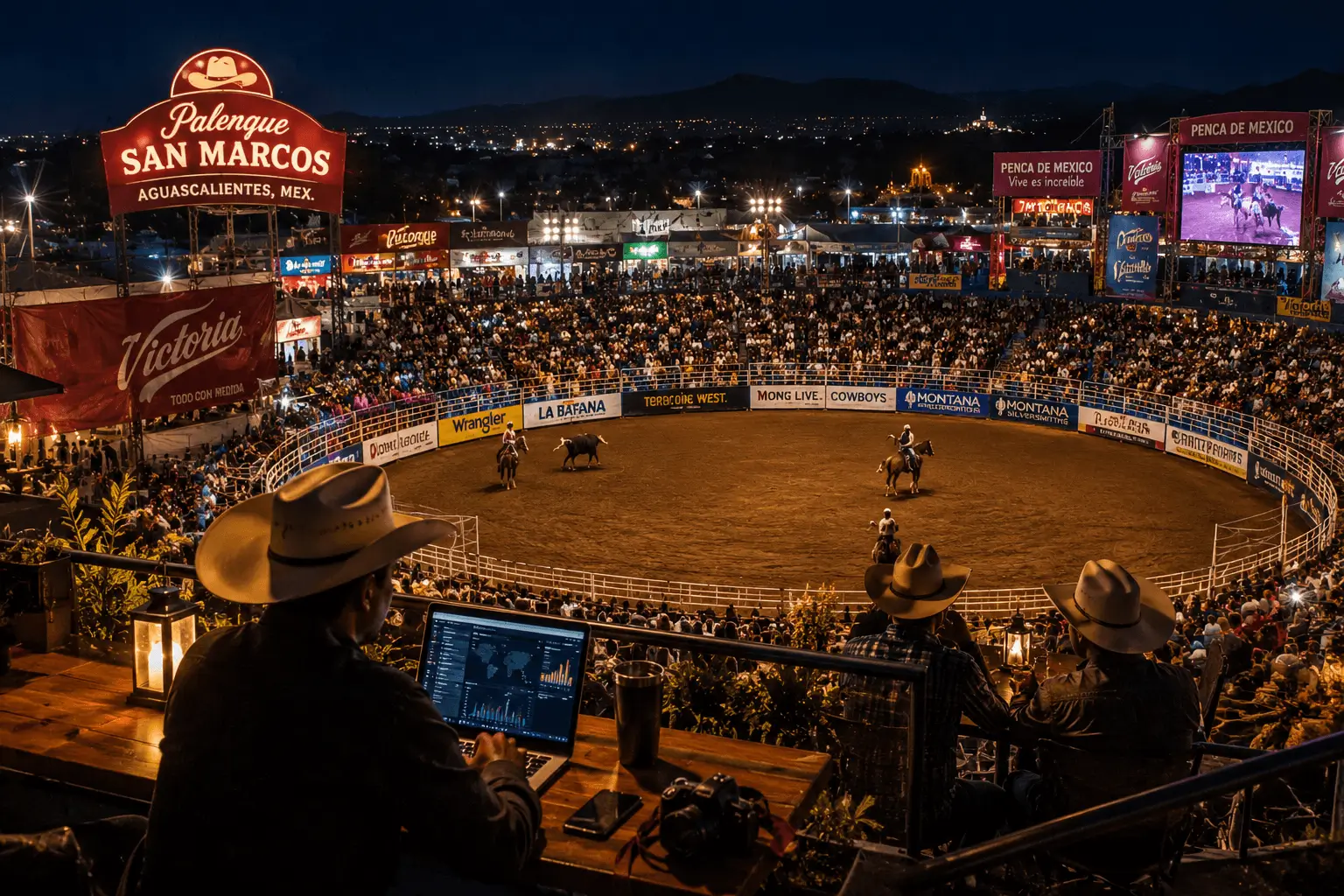
In Northern Mexico, Palenques served a similar role. These circular arenas inside agricultural fairs became the heartbeat of regional identity. Music, horse culture, commerce and frontier traditions blended together into a powerful social ecosystem that shaped both entertainment and local economies.
In Southern Brazil and Mato Grosso do Sul, frontier music absorbed influences from Paraguay, Argentina and American country culture simultaneously. The result was a hybrid western identity built around rodeios, agricultural fairs and regional migration patterns.
Even in Colombia, Música Popular and rural festival culture created environments remarkably similar to Brazilian and Texan rodeo circuits. The aesthetics changed slightly, but the underlying structure remained familiar: music, cattle culture, regional pride and aspirational rural identity operating together as economic force.
These frontier ecosystems reveal something deeper about western culture across the Americas.
Despite language differences, the cowboy archetype remains economically powerful.
Whether represented by the American cowboy, the Mexican vaquero, the Brazilian peão or the Argentine gaucho, rural identity continues to function as a source of symbolic capital — capable of influencing markets, tourism, branding and consumer aspiration.
Rodeo as Rural Soft Power
Modern western culture operates as a form of soft power.
Not military power. Not political power.
Cultural power.
Rodeos helped transform rural identity into an aspirational product consumed far beyond agricultural communities. What was once local tradition evolved into a global lifestyle aesthetic associated with freedom, authenticity, land ownership and frontier independence.
This influence expanded through fashion, music and branding.
Boot companies became international brands. Pickup trucks transformed into symbols of status and masculinity. Ranch aesthetics entered luxury architecture. Country music became intertwined with lifestyle marketing. Social media accelerated the romanticization of western identity for younger generations disconnected from actual agricultural work.
The rise of neo-western media accelerated this process even further.
Series like Yellowstone, the revival of traditional country music and the growth of western-inspired fashion all reflect the same underlying phenomenon: rural identity regained cultural value in an increasingly digital and urbanized world.
This movement created a new type of aspirational economy.
People no longer consume western culture only through music. They consume it through lifestyle.
Land.
Ranches.
Trucks.
Boots.
Rural tourism.
Country festivals.
Western architecture.
Agribusiness branding.
Rodeos became gateways into this broader ecosystem.
What began as regional entertainment evolved into a continental cultural infrastructure capable of influencing investment, migration, consumer behavior and regional development.
Across the Americas, culture continues to shape the flow of capital.
And few institutions have done this more effectively than the rodeo.
THE FRONTIER ECONOMY
How Rodeos Became Economic Infrastructure Across Rural America
If culture creates identity, infrastructure determines where capital flows.
Across the Americas, rodeos evolved far beyond entertainment because they solved something deeper for rural regions: they created economic concentration. They brought people, commerce, tourism, visibility and investment into areas often ignored by major urban financial systems.
The arena became more than a stage.
It became a marketplace.
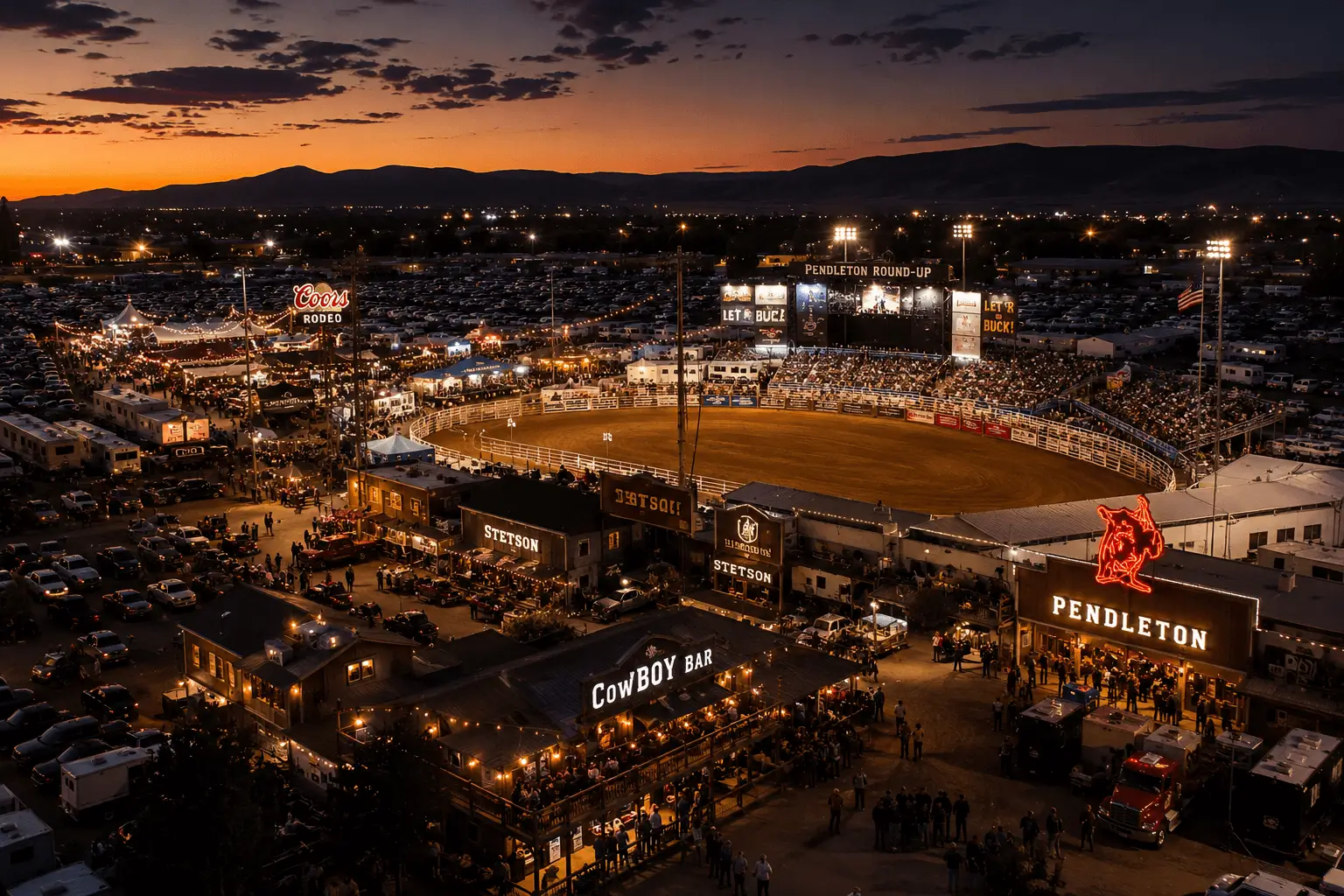
As western culture expanded commercially, rodeo circuits transformed into temporary economic capitals capable of influencing local business cycles, real estate demand and regional perception. In many frontier regions, the annual rodeo season became one of the strongest economic drivers of the year.
This phenomenon is visible everywhere western identity became culturally dominant.
Texas.
Northern Mexico.
Barretos.
Goiás.
Mato Grosso do Sul.
Different languages. Same economic mechanics.
Rodeos as Economic Hubs
A major rodeo does not impact only the arena.
It activates an entire regional supply chain.
Hotels reach maximum occupancy. Gas stations operate around the clock. Restaurants expand service capacity. Western clothing stores increase inventory. Local transportation becomes overloaded. Rural tourism accelerates. Temporary jobs emerge. Small businesses experience revenue spikes that can shape their annual financial performance.
The economic ripple effect extends far beyond ticket sales.
In many rural regions, rodeos became synchronized with broader agricultural and commercial calendars. Livestock auctions, machinery expos, farming technology showcases and political networking events naturally clustered around rodeo festivals because they already concentrated the exact audience businesses wanted to reach.
The arena became a platform for economic trust.
Unlike urban conferences built around corporate branding, rodeos created environments where regional relationships were reinforced through culture and shared identity. Deals happened at restaurants, fairs, bars, livestock pavilions and backstage gatherings. Business and entertainment stopped functioning as separate categories.
The western economy became relational.
This dynamic explains why many rural entrepreneurs view rodeos as strategic assets rather than simple entertainment events. The visibility generated by a successful rodeo can influence tourism perception, attract outside visitors and elevate the symbolic value of entire municipalities.
A strong rodeo circuit signals vitality.
And vitality attracts capital.
How Rural Events Influence Land Value
One of the least discussed aspects of western culture is its impact on territorial valuation.
Rodeo cities often become more than entertainment destinations. They evolve into symbolic economic territories associated with identity, tourism and aspirational lifestyle branding.
This directly affects real estate perception.
In the United States, towns connected to strong rodeo and ranch culture frequently benefit from increased demand for rural properties, second homes and lifestyle-oriented ranch investments. The cultural symbolism attached to western living increases emotional demand for land ownership itself.
The same dynamic increasingly appears across Latin America.
In Brazil, cities connected to major rodeio circuits have experienced rapid urban expansion, hospitality growth and increased visibility among investors tied to agribusiness, tourism and entertainment sectors. Areas once viewed as isolated agricultural zones now market themselves as cultural destinations associated with western lifestyle and rural prosperity.
Barretos is perhaps the clearest example.
What began as a regional rodeio transformed into one of the most recognizable rural entertainment brands in Latin America. The city itself became associated with cowboy culture, agribusiness networking and large-scale tourism infrastructure.
The rodeo created territorial identity.
And territorial identity increased economic relevance.
This pattern extends into ranch real estate markets as well. Rural properties connected to strong western branding often command higher emotional and commercial value because they represent more than productive land. They represent access to lifestyle, prestige and cultural belonging.
In frontier economies, symbolism influences valuation.
The Yellowstone Effect and the Rise of Neo-Western Luxury
One of the most important cultural developments of the last decade has been the return of western aesthetics to mainstream aspiration.
Series like Yellowstone did more than entertain audiences.
They reignited the mythology of the frontier.
The modern western revival accelerated demand for ranch properties, luxury rural tourism, cowboy fashion, pickup trucks and land-centered lifestyles across the United States. Suddenly, rural identity became aspirational again for urban populations exhausted by hyper-digital environments and overcrowded cities.
The cowboy was rebranded for the modern economy.
Not as a relic of the past — but as a symbol of autonomy, land ownership and authenticity.
This shift created what many analysts now describe as neo-western luxury.
Large ranches evolved into high-end assets. Western architecture gained popularity among affluent buyers. Rural retreats became status symbols. Luxury hospitality brands incorporated cowboy aesthetics into tourism experiences designed for wealthy urban consumers seeking emotional connection with frontier mythology.
The western lifestyle became premium.
And where aspiration grows, land values follow.
This movement also reinforced the economic importance of rodeos and frontier festivals. They no longer functioned solely as local traditions. They became gateways into an aspirational ecosystem connected to tourism, branding, fashion and real estate.
Culture stopped being peripheral to the economy.
It became one of its driving forces.
Texas and the Business of Western Identity
Few places demonstrate the commercial strength of western culture more effectively than Texas.
Texas transformed cowboy identity into a complete economic system.
Rodeos became media platforms. Ranches became luxury brands. Western apparel became global fashion. Country music became commercial infrastructure supporting tourism, hospitality and entertainment economies.
Entire industries emerged from the monetization of frontier identity.
Boot manufacturers.
Whiskey brands.
Truck culture.
Western luxury real estate.
Ranch tourism.
Country festivals.
Outdoor lifestyle media.
The cowboy economy evolved into a multi-billion-dollar ecosystem rooted not only in agriculture, but in symbolism.
Texas understood something many regions still underestimate:
Cultural identity can function as economic infrastructure.
The state successfully exported western mythology across the world while simultaneously increasing the value of local brands, land and tourism sectors. Today, international audiences consume Texas not simply as geography, but as lifestyle.
That perception generates measurable economic value.
Brazil’s Emerging Cowboy Economy
Brazil followed a different path, but reached remarkably similar outcomes.
Over the last three decades, rodeio culture expanded from regional agricultural entertainment into one of the strongest cultural forces shaping the modern Brazilian countryside.
Cities like Barretos and regions across Goiás and Mato Grosso do Sul became central nodes of a growing cowboy economy driven by agribusiness expansion, country music festivals and western lifestyle branding.
The rise of Agronejo accelerated this transformation.
Modern Brazilian country artists combined luxury rural aesthetics with large-scale entertainment infrastructure, creating a uniquely Brazilian version of the neo-western economy. Pickup trucks, ranch fashion, horseback imagery and agricultural symbolism became integrated into mainstream aspirational culture.
What once belonged exclusively to rural communities became desirable to urban consumers.
This cultural shift created economic consequences.
Western-themed tourism expanded. Ranch events gained sponsorship from major corporations. Rural municipalities increased visibility. Agricultural regions developed stronger media presence. Luxury countryside developments became increasingly attractive for investors seeking land-based lifestyle assets.
The cowboy economy stopped being niche.
It became scalable.
And much like Texas, Brazil discovered that rural identity could be transformed into commercial influence far beyond agriculture itself.
Western Identity Became Economic Infrastructure
Across the Americas, western culture continues to evolve beyond symbolism.
It shapes tourism.
It shapes migration.
It shapes consumption.
It shapes land perception.
It shapes investment confidence.
Rodeos, festivals and frontier entertainment circuits created more than memories and traditions. They created economic gravity around identity, territory and cultural aspiration.
The modern frontier economy is not powered only by commodities or agriculture.
It is powered by narrative.
And few narratives remain more economically resilient than the mythology of the cowboy.
Western identity became economic infrastructure.
THE MODERN FRONTIER
How AI, Media and Cultural Trust Are Reshaping the Rural Economy
Every frontier eventually changes.
Railroads changed the American West. Highways reshaped rural trade routes. Television transformed country music into mass entertainment. The internet dissolved geographical barriers that once protected regional cultures.
Now, a new transformation is emerging across the rural economies of the Americas.
The modern frontier is becoming digital.
And just like previous frontier shifts, this transformation is creating new winners, new vulnerabilities and entirely new forms of economic influence.
The future of western economies will not be shaped only by agriculture, land or commodities.
It will increasingly be shaped by visibility, trust, narrative and digital infrastructure.
The Fragility of Rural Entertainment Economies
Rural economies depend heavily on perception.
Trust matters.
Safety matters.
Stability matters.
When regional confidence weakens, entertainment ecosystems are often among the first sectors to feel the consequences. Tourism slows down. Sponsorship contracts disappear. Visitors become hesitant. Local commerce loses momentum. Investors postpone expansion plans.
This pattern can be observed across multiple frontier regions throughout the Americas.
When instability grows around rural entertainment corridors, the impact extends far beyond concerts and festivals. Hotels lose occupancy. Restaurants experience declining movement. Property demand softens. Cultural events struggle to attract long-term corporate partnerships.
The decline of rural entertainment zones often signals something deeper:
A decline in regional economic confidence.
Because rodeos and western festivals are deeply connected to identity and tourism, they function as indicators of local vitality. Strong cultural circuits tend to attract investment, migration and business activity. Weakening circuits often reflect uncertainty surrounding security, infrastructure or long-term regional growth.
The frontier economy operates heavily on emotional trust.
And trust directly influences capital movement.
The Power of Cultural Narrative
Modern economies are increasingly shaped by narrative.
Not fictional narrative — cultural narrative.
The mythology surrounding western identity continues to influence how regions are perceived globally. The cowboy remains one of the most commercially durable archetypes in the modern world because he represents more than occupation.
He represents independence.
Land ownership.
Self-reliance.
Territorial connection.
Frontier resilience.
This symbolic power affects branding, tourism and economic desirability.
Texas understood this decades ago. Nashville transformed cultural identity into global entertainment infrastructure. Rural regions across Latin America are now experiencing similar dynamics as western aesthetics regain international relevance through music, fashion and digital media.
In many ways, frontier mythology functions as an economic amplifier.
Places associated with strong identity often attract stronger emotional investment. This applies to tourism markets, ranch real estate, western fashion brands and even agricultural business ecosystems seeking differentiation in crowded global markets.
The modern frontier economy is partially psychological.
People invest not only in land or products.
They invest in stories.
AI and SEO as Rural Infrastructure
For decades, rural visibility depended almost entirely on physical infrastructure.
Roads.
Railways.
Television.
Radio towers.
Today, discoverability itself has become infrastructure.
In the digital economy, regions, ranches, western brands and rural businesses compete for visibility inside algorithmic ecosystems dominated by search engines, social media platforms and AI-driven recommendation systems.
This creates a completely new frontier.
The regions capable of building digital presence now possess advantages that go far beyond marketing. Visibility influences tourism demand, land desirability, media relevance and even international investment perception.
AI and SEO are becoming strategic tools for the modern rural economy.
A ranch property with strong digital positioning can attract international buyers. A rodeo festival with global discoverability can expand tourism reach beyond its traditional audience. A western brand with strong storytelling can transform local identity into scalable commercial influence.
The frontier no longer ends at geography.
It extends into algorithms.
This transformation is especially important for regions historically overlooked by mainstream media. Digital ecosystems allow rural entrepreneurs, western creators and agricultural brands to bypass traditional gatekeepers and build direct global audiences.
In the modern frontier economy, discoverability creates leverage.
The New Frontier Is Digital
Western culture itself is evolving into a distributed digital ecosystem.
Country identity no longer depends solely on local radio stations or physical festivals. Today, frontier culture circulates through podcasts, streaming platforms, social media communities, newsletters, digital magazines and algorithmic recommendation systems connecting audiences across continents.
The rodeo economy is becoming hybrid.
Physical arenas still matter.
But digital arenas increasingly shape perception.
A rodeo in Goiás can inspire audiences in Texas. A Tex-Mex artist can influence fashion trends in Brazil. Ranch architecture from Montana can reshape luxury countryside developments across Latin America.
The modern cowboy economy operates through interconnected media ecosystems.
This shift is creating a new generation of western entrepreneurs:
digital ranch brands,
rural influencers,
country media platforms,
AI-driven agricultural marketing systems,
western lifestyle creators,
frontier real estate networks.
Culture is scaling globally while remaining emotionally tied to regional identity.
That combination is extraordinarily powerful.
The Rise of a Continental Western Economy
One of the most significant transformations happening today is the emergence of a connected western economy across the Americas.
For decades, these frontier cultures evolved in parallel:
Texas rodeos,
Mexican Palenques,
Brazilian rodeios,
Argentine gaucho festivals,
Colombian ferias agropecuarias.
Now, digital media is beginning to connect them.
Shared aesthetics, music influences, rural branding and cowboy symbolism increasingly circulate across borders, creating a continental western ecosystem tied together by culture, tourism, media and land-based aspiration.
Texas influences Goiás.
Tex-Mex aesthetics influence Mato Grosso do Sul.
Nashville influences Agronejo.
Brazilian rodeio culture influences Latin American digital audiences.
The frontier is becoming interconnected.
This creates entirely new opportunities for media, branding, tourism and investment ecosystems capable of understanding the cultural mechanics behind western identity.
And that is precisely where platforms like Rodeo Country Media position themselves:
At the intersection of culture, capital and the evolving digital frontier.
The Future of the Frontier
Across the Americas, rodeos continue to shape more than entertainment.
They shape identity.
They shape investment.
They shape migration.
They shape land value.
They shape regional trust.
They shape the future of frontier economies in a rapidly changing world.
What began as rural tradition evolved into cultural infrastructure.
What became cultural infrastructure evolved into economic infrastructure.
And now, in the digital era, western identity itself is becoming a strategic asset within a new continental frontier economy powered by media, technology, storytelling and trust.
The arena may still be built from steel, dirt and cattle fences.
But the modern frontier increasingly exists online.

As the founder of Rodeo Country Media, his work combines SEO, AI-driven media strategy, cultural storytelling and semantic media ecosystems to explore how rodeios, rural branding, tourism, western lifestyle and country culture shape regional economies, land perception and modern frontier business networks from Texas and Northern Mexico to Goiás and the South American heartland.
Through editorial media, digital radio and discoverability-driven platforms, Paulo documents the rise of a new continental cowboy economy where culture, territory, branding and media increasingly influence rural prestige, investment and the future of western identity in the digital age.

-
LIVE

Loading...
FAZENDA RODEO
© 2026 - BY PAULO RODEO Specialist in Marketing, SEO, and Full Stack Development, focused on the global agribusiness ecosystem. Founder of Fazenda Rodeo, a platform that connects Brazil and the USA through elite real estate, digital country radio, and specialized MarTech tools. We bridge the gap between traditional ranching and the digital frontier.


